
US-India Corridor Intelligence
The operating layer of the US‑India corridor.
Corridor Intelligence is not geography, and it is not culture training. It is the operating layer of leadership, decision-making, and people-system behavior that determines whether cross-border growth holds together — or quietly leaks value.
For US acquirers, PE operating partners, GCC sponsors, CHROs, country leaders.
What is Corridor Intelligence?
Corridor Intelligence is the structured ability to read the human and operating signals running between U.S. and India sides of a single enterprise — and to act on them before they show up as deal drag, GCC plateau, or leadership-readiness gaps.
- It is operating intelligence, not geography. The corridor is how an enterprise actually runs across borders.
- It is diagnostic before prescriptive. Recommendations are sourced from signals, not templates.
- It is leader-grade. The output is usable in sponsor, board, and executive committee conversations.
Corridor signal view
India leadersWhy generic culture models miss the corridor.
Global culture frameworks and basic communication training were built for awareness, not for operating decisions. They describe difference, but they do not surface where decisions stall, where sponsors lose confidence, or where leadership-readiness gaps quietly hold back a GCC or an integration.
Corridor Intelligence is built for the second conversation — the one a CEO, sponsor, or country leader has after the awareness workshop is over and the operating problem is still there.
- · Where is decision drag actually originating?
- · Which leadership pairs are quietly losing trust?
- · What is the GCC sponsor reading that no one is naming?
- · Which integration risks are behavioral, not structural?
- · What does "ready" look like at the next stage?

Where corridor risk surfaces in real organizations.
Corridor risk rarely arrives labeled. It shows up as small patterns — handoffs, escalations, decision rights — that compound into integration drag, GCC plateau, and leadership-readiness gaps.

Post-deal integration drag
Cultural and leadership signals stall the first 90 days; deal value leaks into rework and re-alignment.

GCC capability plateau
Reliable delivery exists, but sponsor confidence stalls before strategic ownership is granted.

Leadership handoffs go quiet
Handoffs across functions and time zones lose context; capable leaders look slower than they are.

Decision rights blur across the corridor
Authority is technically clear but practically ambiguous, slowing escalation and ownership.

Stakeholder expectations diverge
Global stakeholders and India teams are running against different scoreboards without naming it.

Performance expectations mismatch
Reviews, ratings, and recognition systems do not match the cross-border behaviors actually being asked for.
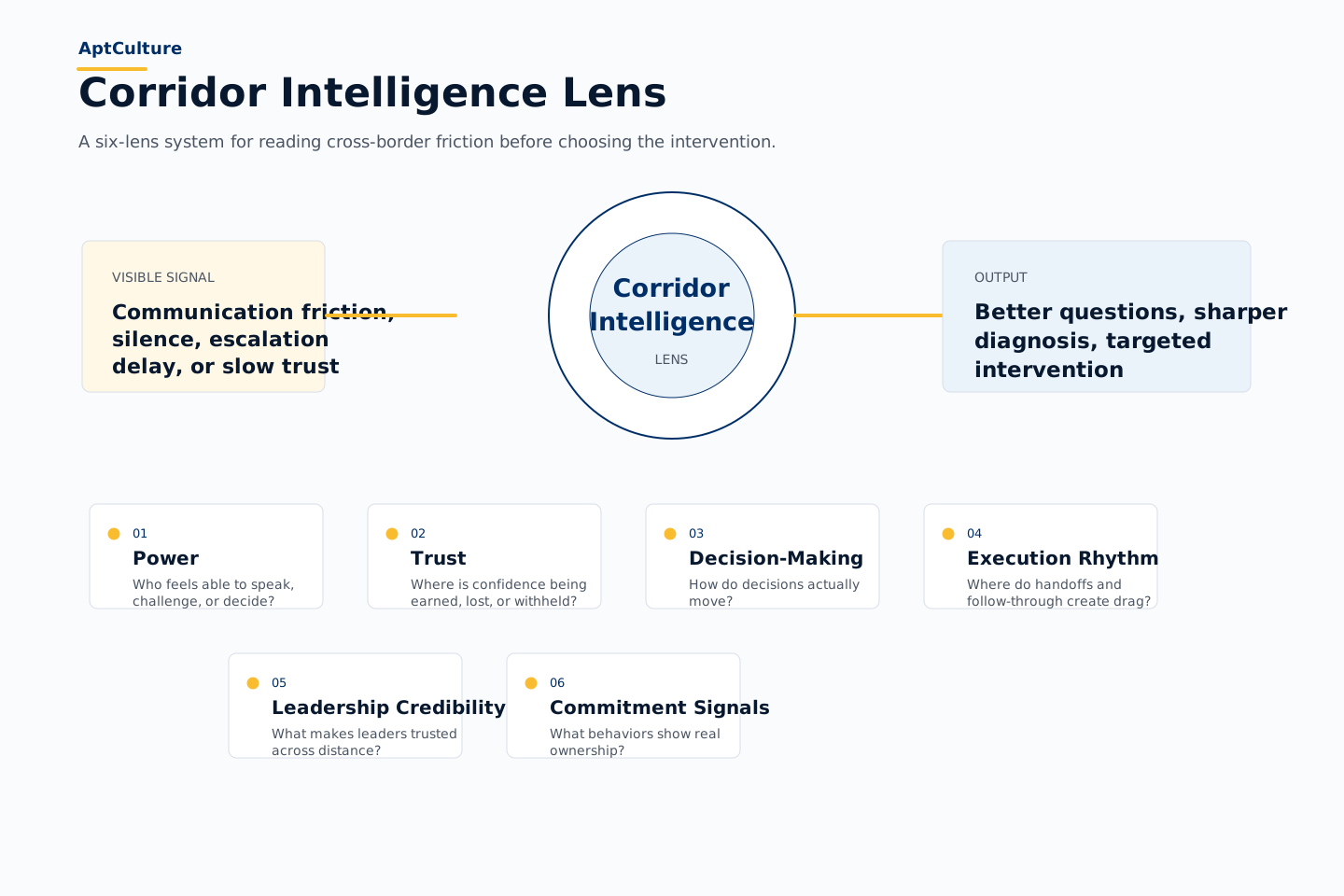
The AptCulture Corridor Intelligence Lens.
Five reading layers used in diagnostics, M&A integration plans, and GCC readiness reviews to surface the human-system signals leaders cannot see from one side of the corridor.
- 01
Market context
How U.S. and India market expectations are shifting around this organization.
- 02
Leadership expectations
What sponsors, boards, and country leaders actually expect from people and operating culture.
- 03
Operating culture
How decisions are made, escalated, and executed across functions and time zones.
- 04
Stakeholder trust
Where trust is established, eroded, or stalled across U.S. and India teams.
- 05
Capability gaps
The leadership, manager, and team capability gaps the corridor is exposing.
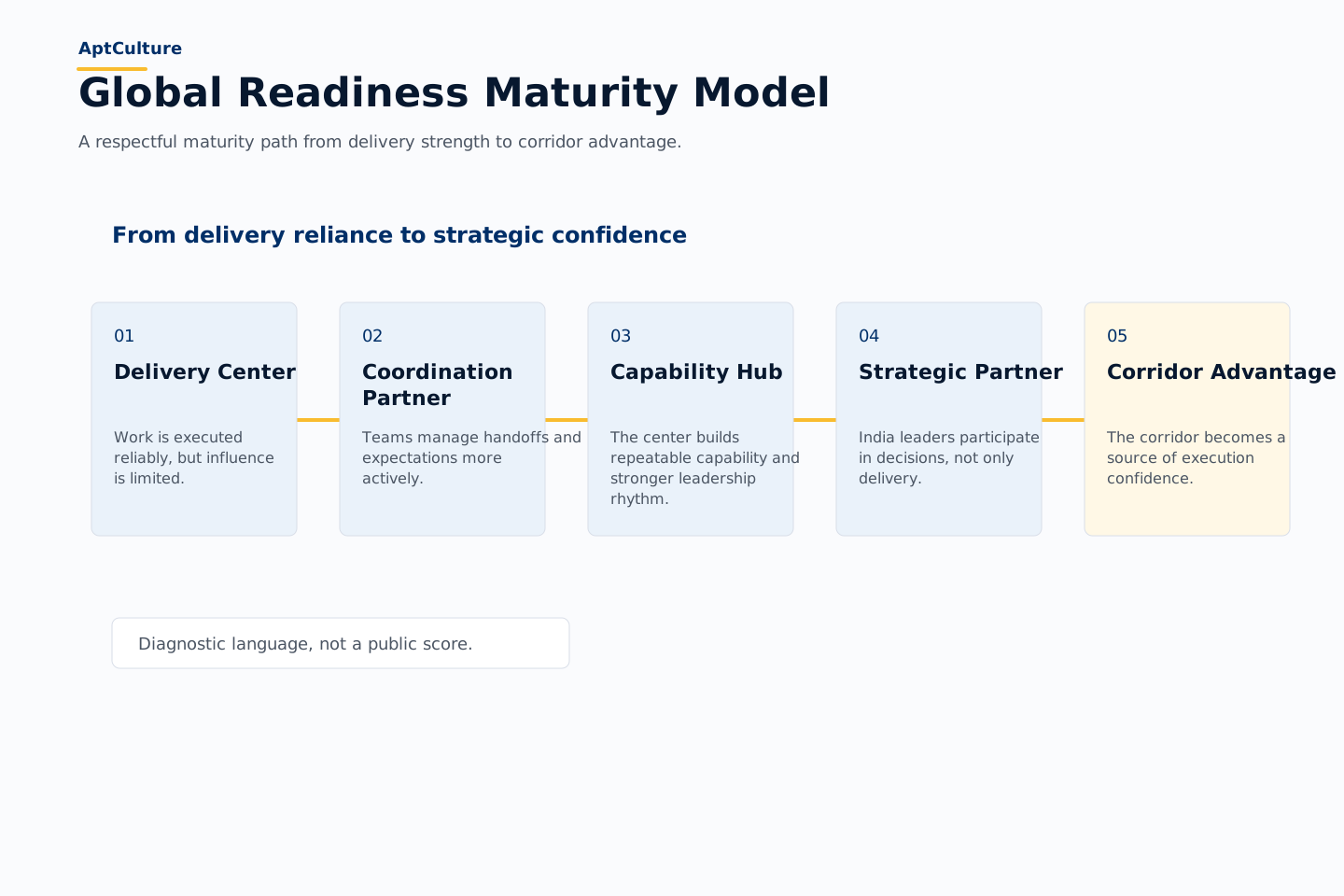
Global Readiness Maturity Model.
A staged read of where an organization actually sits — from reactive cross-border work, through structured execution, to a globally fluent operating rhythm.
Used with sponsors and CHROs to set a defensible next stage, not a generic aspiration.
- Stage 01
Reactive
Cross-border work handled ad-hoc by individual leaders.
- Stage 02
Structured
Operating rituals exist but are still HQ-centric.
- Stage 03
Integrated
Decisions, handoffs, and accountability work across the corridor.
- Stage 04
Globally fluent
The corridor is a single operating rhythm, not two sides.
Where is the corridor showing up in your work?
Five entry points for the leaders who carry the corridor most visibly. Each routes into the right advisory lane.
M&A Cultural Integration

For U.S. acquirers & PE operating partners
Protecting deal value across U.S.–India integration. Sponsor-aligned integration plan grounded in cultural due diligence and leadership-pair stabilization.
Explore M&A integration →GCC Performance & Global Readiness
For GCC sponsors & country leaders
Moving a GCC from delivery reliability to strategic capability. A diagnosed readiness path the sponsor and country leader can defend.
Explore GCC readiness →L&D Solutions for Business Problems
For CHROs & L&D leaders
Translating a business problem into a diagnostic-led intervention. Behavior-change, learning, coaching, and reinforcement designed against the outcome.
Explore L&D for business problems →People Performance

For India leaders & functional heads
Building leadership, manager, and team capability for cross-border execution. Capability system that turns leadership intent into corridor execution.
Explore People Performance →Custom L&D Architecture

For founders, boards & sponsors
A bespoke leadership and learning architecture around a real business need. An owned architecture — not a course catalog — built around the corridor.
Explore Custom L&D →
300 cross-border signals.
A searchable library of recurring US-India corridor patterns across M&A integration, GCC scale, leadership readiness, and people performance. Built to grow toward 300 entries; the first release opens with a curated set.
Includes AptCulture practice patterns where approved, plus public datasets and cited sources. No unverified claims.
Built as a CMS-ready signal library so public and private patterns can be separated cleanly.

What senior leaders are actually asking.
Common executive-grade questions across M&A integration, GCC performance, and people performance — surfaced from current advisory conversations.

What is Corridor Intelligence and why does it matter for US-India enterprises?
Corridor Intelligence is the operating layer of leadership and people-system behavior that determines whether US-India growth holds together. It matters because the friction that erodes deal value, GCC trust, and leadership readiness lives here — not in strategy decks.

How is this different from culture training or DEI work?
Culture training builds awareness; Corridor Intelligence is diagnostic and operating. It surfaces where decisions stall, where sponsor trust is eroding, and which capability gaps are quietly shaping cross-border performance.

When should a US acquirer involve Corridor Intelligence in a deal?
Before integration planning is locked. Cultural and leadership risk read early shapes the first 90 days far more than it shapes month nine. The earlier the read, the cheaper the correction.
What does a GCC sponsor get from a corridor readiness review?
A defensible read of where the GCC actually sits on the Global Readiness Maturity Model, what is blocking the next stage, and which leadership and people-system moves unlock it.
Can Corridor Intelligence be applied without a major transaction?
Yes. It is used in ongoing GCC scale-up, leadership transitions, post-restructure stabilization, and recurring quarterly reviews with sponsors and CHROs.

What does AptCulture not do?
We do not run generic culture training, sell off-the-shelf assessments as the answer, or substitute opinion for diagnosis. Recommendations are sourced from signals.
Start with a Corridor Readiness Diagnostic.
A structured read of how the corridor is currently showing up in your leadership, integration, or GCC work — used as the starting point for serious cross-border advisory engagements.