
US-India Corridor Intelligence for leaders building across borders.
AptCulture helps senior teams diagnose the human-system friction behind U.S.–India M&A integration, GCC readiness, and cross-border execution.
Selected relationships
20+ years trusted across culture, leadership, and cross-border work.
 Enterprise Learning Journeys
 Cross-Cultural Programs
 Leadership Cohorts
 M&A Cultural Integration

 Cross-Cultural Programs
 Cross-Cultural Programs
 Enterprise Learning Journeys





 Cross-Cultural Programs

 M&A Cultural Integration



 Cross-Cultural Programs
 Leadership Cohorts




 M&A Cultural Integration
 M&A Cultural Integration
Corridor ecosystem
20+ years across practice, coaching, and assessment ecosystems.



AptCulture tagline
Culture moves through systems. Leadership makes it visible.
A premium corridor view for leaders who need culture, capability, and execution to travel cleanly between India, the US, and global teams.
Corridor operating layer
Decision rhythm, trust, handoffs, and capability signals made visible before they become execution drag.
India has become a strategic execution corridor.
India is no longer only a cost or talent market. It is now a strategic execution and capability corridor — shaping operating alignment, leadership decisions, GCC scale, and post-deal integration risk for global enterprises.
- Operating alignment between U.S. headquarters and India teams now determines deal velocity.
- GCCs are being asked to move from delivery reliability to strategic capability.
- Cultural integration risk surfaces as decision drag long before it appears on the P&L.

Where the corridor shows its friction.
The recurring human-system signals that erode deal value, GCC trust, and leadership readiness — named and measured.
Culture is execution infrastructure.
Culture is not a values poster. In cross-border enterprises, culture is the operating layer that shapes decision-making, escalation, trust, accountability, handoffs, and integration performance.
When that layer is unclear, deal value leaks, GCCs underperform their charter, and capable leaders look slower than they are.
- · Decision speed and escalation paths
- · Stakeholder trust across U.S. and India teams
- · Accountability and ownership clarity
- · Handoff quality across time zones and functions
- · Post-deal integration velocity

M&A integration and GCC readiness.
These are the two cross-border moments where the cost of getting people and operating culture wrong is most visible. People Performance sits underneath both as the capability system.
M&A Cultural Integration

For acquirers and PE operating partners integrating across the U.S.–India corridor.
Sponsor-aligned integration plan that protects deal value through the first 90 days and beyond.
Explore M&A integration →GCC Performance & Global Readiness
For GCC sponsors, India country leaders, and CHROs scaling beyond delivery into strategic capability.
A diagnosed path from delivery reliability to globally trusted strategic partner.
Explore GCC readiness →
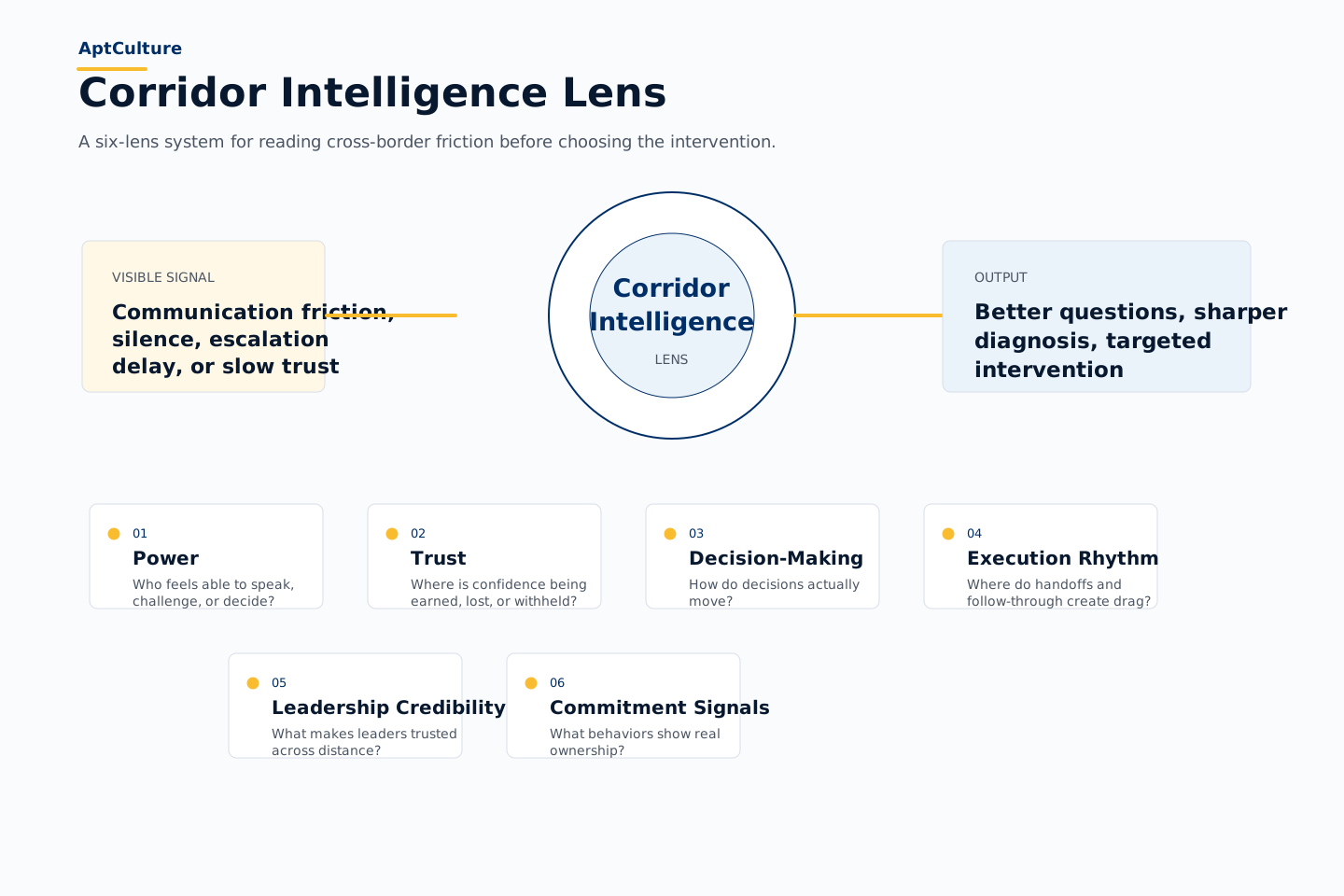
The Corridor Intelligence Lens.
Five reading layers used in diagnostics, M&A integration plans, and GCC readiness reviews to surface the human-system signals leaders cannot see from one side of the corridor.
Used in diagnostics, M&A integration plans, and GCC readiness reviews.
Latest corridor briefings.
Answer-first executive briefings on M&A integration, GCC readiness, leadership, and people performance.

Corridor Question
Why is our post-acquisition integration with an Indian company slower than expected?
Most US-India integration drag is human-system, not effort. Trust, decision rights, leadership rhythm, and operating assumptions decide year-one velocity.

Corridor Question
How do we know if our India GCC is ready for a global mandate?
Readiness is not a delivery score. It is a leadership, stakeholder, and operating-rhythm signal pattern that global sponsors recognize when they see it.

Corridor Question
Why is our India team technically strong but not seen as strategic by HQ?
Technical excellence is necessary, not sufficient. Strategic trust comes from judgment, context, and decision partnership — and those have to be visible.
Assess your corridor readiness.
A 15-minute structured diagnostic to surface the human-system friction behind your cross-border performance.