
Turn people performance into business performance.
For Indian GCC, HR, L&D, and business leaders. We design diagnostic-led interventions that connect leadership behavior to revenue, productivity, profit, growth, and operating performance — not generic capability uplift.
Who this page is for.
People Performance work suits leaders carrying a real, measurable business outcome — not a generic learning mandate. It sits underneath GCC scale, integration, and cross-border execution as the capability system.
- Indian GCC heads, country leaders, and senior business leaders.
- CHROs and L&D leaders translating business problems into capability work.
- HR business partners carrying performance, manager effectiveness, and retention mandates.
- Functional leaders accountable for execution against a business outcome.

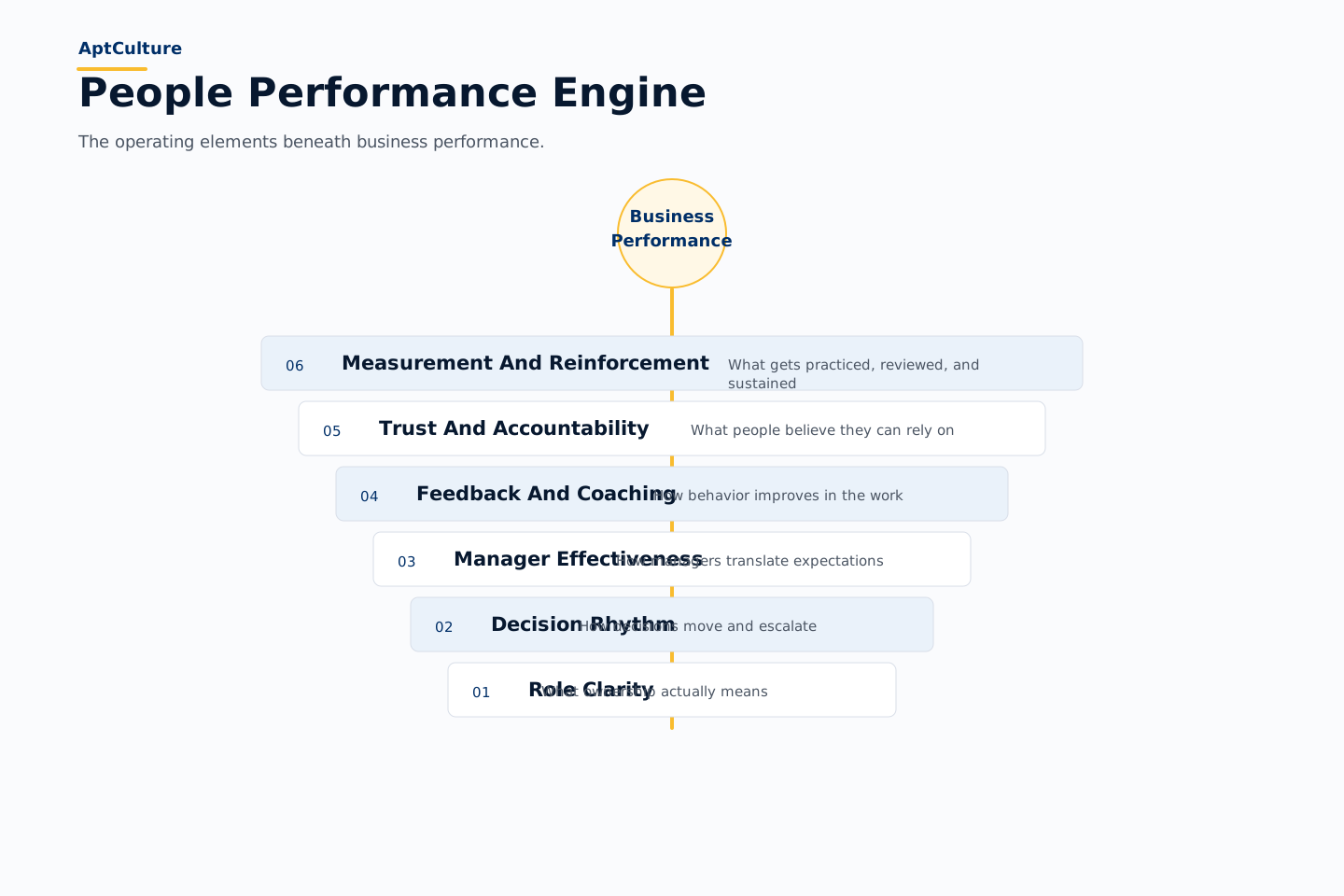
The People Performance Engine.
A business-impact-led model that connects diagnosis, intervention design, coaching, reinforcement, and measurement into a single engine — not a course catalog.
Built for India-side buyers carrying real business accountability.
We design interventions against business outcomes.
Capability is only useful when it lands on the outcome. These are the categories of business outcome AptCulture interventions are designed to move.

Revenue and growth
Capability that protects pipeline conversion, account expansion, and growth velocity.

Productivity
Leader, manager, and team behaviors that reduce rework, drag, and decision latency.

Profit and margin
Operating culture that protects margin discipline across the corridor.

Operational performance
Cadence, handoffs, and decision rhythm that hold under cross-border execution.

Manager effectiveness
Frontline and middle managers operating as the system that holds performance.

Stakeholder trust
Trust across HQ, country leadership, and functional sponsors.
Where people performance most often breaks.

Frontline and middle managers carry too much, too unclearly
Performance drag accumulates where managers do not yet have the operating muscles.

Capable individual contributors stall on the move to leader
Technical strength is not yet matched with judgment, influence, and ownership.

Teams move fast on tasks, slow on decisions
Execution looks busy; decisions do not land.

High performers leave before they are ready to succeed
The retention problem is actually a readiness and progression problem.

Cross-border behavioral friction compounds quietly
Teams execute reliably; the operating rhythm does not hold under pressure.

L&D investment does not connect to business outcomes
Programs deliver completions; the business problem does not move.
Programs inside People Performance.
The programs and capability tracks most often deployed across leader, manager, and team levels.
- Program
First-Time Leader Journey
Builds the judgment, influence, and ownership skills of first-time leaders.
View program → - Program
High-Potential Leader Program
Accelerates HiPo leaders toward senior and cross-border readiness.
View program → - Program
Senior Leader Accelerator
Prepares senior leaders for the transition from doing to leading strategy.
View program → - Program
1:1 Executive Coaching
ICF-PCC executive coaching for leaders carrying critical decisions.
View program → - Program
Group Coaching
Peer cohort coaching for leaders at the same level working on related challenges.
View program → - Program
Team Coaching
Coaching for intact teams on decision rhythm, trust, and operating culture.
View program → - Program
Individual Intercultural Coaching
Coaching for leaders navigating cross-border behavior and stakeholder trust.
View program → - Program
Corporate Intercultural Program
Organization-wide intercultural readiness for cross-border execution.
View program →  Program
Global Mobility Readiness
Prepares leaders and families for cross-border assignments and transitions.
View program →
Program detail pages use the approved source-backed taxonomy.

Estimate the business impact of a people-performance intervention.
Use the Business Impact Predictor to scope a directional business case before you commission the work.
Diagnosis → design → facilitation → coaching → reinforcement → measurement.
A single engagement spine across diagnosis, design, delivery, and measurement — engineered against the named outcome.

- 01
- Diagnose
People Performance is the capability layer.
M&A integration and GCC readiness sit on top of People Performance. Without a working capability system, neither holds in the operating week.
This lane exists to make sure leadership intent actually survives contact with manager, team, and individual behavior across the corridor.
- · Inside GCC scale and charter expansion
- · Inside post-deal integration and stabilization
- · Inside cross-border leadership development
- · Inside India-side performance, productivity, and retention work

Build a people performance intervention.
Bring us the business problem. We will diagnose the behavior layer, design the intervention against the outcome, and stay through measurement.